Roads & Commute · Development
County sidewalk-plan draft is open for comment through October 14
San Joaquin County Public Works published a draft connectivity plan after 377 survey responses; the study focuses on five unincorporated communities, not incorporated Mountain House.
Edition: 2026-10-02 · Mountain House Live · AI-assisted source summary & local analysisOriginal source: San Joaquin County Public Works news release · Published September 30, 2026; comment period verified October 2, 2026
San Joaquin County Public Works released a draft Countywide Sidewalk Connectivity Plan on September 30 and is accepting comments through October 14. The county says the work was informed by 377 survey responses and focuses on five unincorporated communities. Mountain House is now an incorporated city and is not one of those named focus communities, so this article does not claim that the draft proposes Mountain House sidewalk projects. The local relevance is regional: residents travel through county communities, share funding and safety concerns, and can compare the county’s method with future local walking and school-route planning.
The plan’s stated purpose is to identify sidewalk gaps and improve connections to schools, transit, parks and other destinations. A draft is not a construction schedule or an appropriation. It can establish priorities and help support later grant applications, but individual projects still require design, funding, environmental review where applicable and agency decisions. Readers should separate a mapped need from a funded commitment. The Public Works release and linked draft are the appropriate evidence for what is under consideration; social-media screenshots of a map can omit legends, jurisdiction boundaries or draft labels.
The 377 responses provide evidence of outreach, but the number alone does not prove statistical representation of every neighborhood. The useful next question is how comments were distributed, which barriers were identified and how the draft ranks competing needs. People reviewing the plan should look for the criteria used to score gaps, the treatment of crossings and accessibility, and the relationship between sidewalks and destinations. A comment that identifies a specific location, user group and consequence is generally easier for planners to evaluate than a broad statement that more sidewalks are needed.
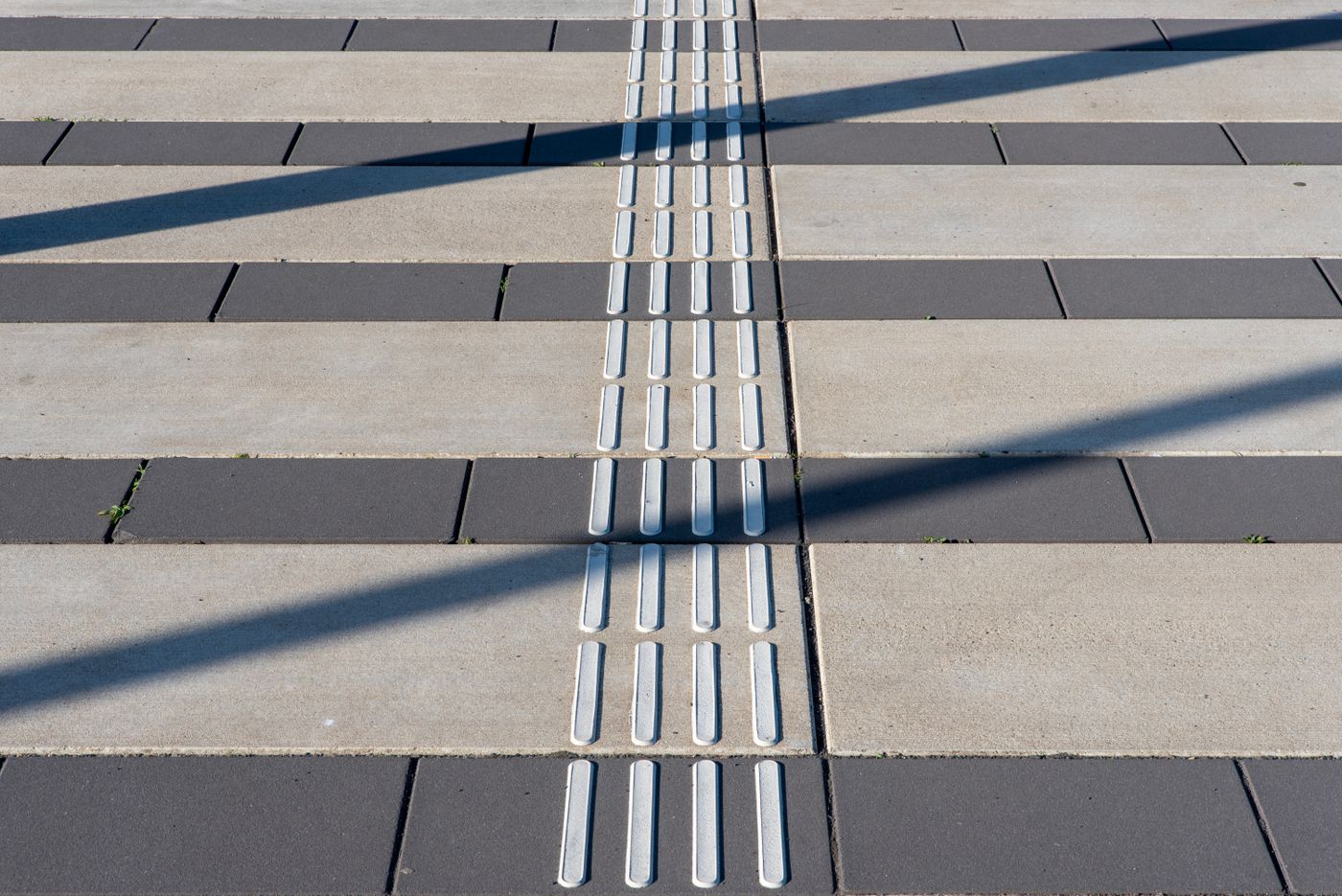
For Mountain House residents, the jurisdiction distinction is essential. Questions about sidewalks inside the city should be directed to Mountain House through its own planning, public works and capital processes. Questions about an unincorporated county road or a destination in the study area belong with the county. Regional trips can cross those lines without drivers or pedestrians noticing, but agencies must know who owns the asset. This article uses a generic tactile-paving photograph because it directly illustrates pedestrian infrastructure without pretending to depict a proposed segment.
The actionable deadline is October 14. Residents interested in the county study should open the Public Works release, follow its plan and comment links and submit feedback before the period closes. Mountain House Live will treat adoption, funding or a revised project list as a later development only if the county publishes it. After the deadline, today’s call for comments should archive. The newsroom will continue to label the plan as draft until an official record changes that status.
Comments can also identify connections that a sidewalk line alone may not solve, such as an unsafe crossing, missing curb ramp, drainage problem or gap between a transit stop and a destination. Reviewers should stay within what they have observed and avoid claiming engineering conclusions without supporting evidence. Photographs submitted to the county should be taken lawfully and should minimize unnecessary identifying details about nearby residents or children.
Source-based account with Mountain House Live’s local analysis. Our interpretation is based on the linked records; it is not a statement from the source organization. Dates are preserved from this edition; confirm time-sensitive details with the original source.